
SERIES · 90 AND COUNTING
What happened to Judi Dench: 91 and refusing to retire
You remember her with the short white hair, looking at James Bond across the desk: “You're a sexist, misogynist dinosaur.” Or wearing Elizabeth I's crown, stealing the film in just a few minutes. If you're asking what happened to Judi Dench, here is the short answer: she is 91 years old —born December 9, 1934, in York, England—, her eyesight is badly deteriorated, and she refuses, in so many words, to retire.
This October 2026, with her memoir about to land, Dench spoke again to the British press —the interview ran in The Times, with her friend and co-author Brendan O'Hea— and made two things clear: the macular degeneration diagnosed in 2012 has worsened, and even so she has no plans to stop. She turns 92 in December.
Educational content prepared with official health sources. Professional medical review pending.
No personalized diagnoses: consult your doctor.
📅 Published October 20, 2026 · 90 and counting series · 5-minute read
“Banish those words”: retirement is not in her vocabulary
There are words Judi Dench would like struck from the dictionary: “retire,” “vintage,” “old.” She means it, and she says it laughing. When people ask whether it isn't time she put her feet up, her answer is: “No, it bloody well isn't.”
She doesn't care for “national treasure” either. “Loathe it,” she says. “Makes me sound like a dusty old relic that's been stuffed away in the back of the cupboard, along with some dinosaur fossils and a broken Roman shield.”
And what is good about turning 91, in her view? One thing, and it belongs to a lifelong stage actress: “They give you a dressing room nearer the stage. Otherwise, forget it.”
“I'm quite good at acting as if I can see”
The serious part of the story is her sight. Macular degeneration —the same condition her mother had— affects her central vision, and in this month's statements she said it has worsened: she can no longer watch television or stand bright light. She leans on the people around her, and when she fails to recognize someone, they sometimes think she is cutting them dead.
Her own line sums it up better than any summary: “I'm quite good at acting as if I can see. I've had to act all my life, so I can act that I can see.”
Acting, though, now takes a new method. “I've had to find a different method of learning lines, because even with the script blown up, I struggle,” she said. “It's made me realise I have a photographic memory, and so not being able to see the pattern of words on the page makes things really difficult.” Friends help her prepare; with time and support, she carries on.
Still working: television, a talking fridge and a new book
Retired, she is not. She hosts “Tea with Judi Dench” on Sky Arts, chatting with guests such as Ian McKellen. This year she voiced a talking high-tech smart fridge in the family film “The Magic Faraway Tree” and took part in a cinematic tribute to the comedian Barry Cryer.
And now comes the book: “Is It Too Late to Make a Run for It?”, her memoir written with Brendan O'Hea. It is published in the UK on October 22, 2026, and in the United States on November 3, 2026 — full of backstage pranks, her greatest roles taken apart, and more than ninety years of stories.
From York to the Oscar: Bond's boss, who arrived late and stayed
Judith Olivia Dench was born on December 9, 1934, in York, England. She debuted in 1957 with the Old Vic Company and built an enormous name in the theatre: Ophelia, Juliet, Lady Macbeth, and in 1968 she even headlined “Cabaret.” For decades she was, above all, a giant of the British stage.
The world discovered her late. In 1995, at 60, she became M, James Bond's boss, in “GoldenEye” —the first woman in the role— and stayed for eight films, through “Skyfall” (2012). She laughs about how much she enjoyed it: “I was drunk with power. I also got to wear some very nice suits — when, in real life, I can't even work the ironing board.”
In 1998 she won the Academy Award for “Shakespeare in Love,” as Queen Elizabeth I, with only a few minutes on screen. Then came “Philomena” (2013) and “Belfast” (2021), more nominations and the same energy as always: that of a woman whose most famous chapter only began at 60.
Why her story speaks to this house
In this series we tell stories of people who keep going. Dench's is not just charming stubbornness: it is a woman adapting in public. She changed how she works, accepts help with what she used to do alone, and keeps choosing projects on her own terms. She doesn't pretend her sight doesn't matter; she jokes that she pretends she can see.
For many families caring for someone who is losing their sight, that combination sounds familiar: accepting support without handing over your life. Which is why this piece closes, like every one in the series, with a question to take to your next appointment.
🩺 A question for your doctor
At your next appointment, ask your doctor: if my eyesight starts to change, what checkups do I need and what support exists so I can keep doing what I love —my work, my reading, my family— safely? Educational content: not medical advice and not a substitute for consulting a healthcare professional.
Eyes get checkups, too
Judi Dench offers no health advice, and neither do we. But her story is a practical reminder: eyesight changes with age, and noticing it early changes what can be done. If someone in your family is losing vision, the previous story in this series is also about staying on your feet at 96.
Read Dolores Huerta's story →Educational content. Not medical advice and not a substitute for consulting a healthcare professional. Rather talk to a specialist who speaks your language? Contact us here →
Frequently asked questions
How old is Judi Dench?
She is 91. She was born on December 9, 1934, in York, England, and turns 92 on December 9, 2026.
What happened to Judi Dench?
She is still working at 91. She hosts “Tea with Judi Dench” on Sky Arts, voiced a character in the family film “The Magic Faraway Tree” (2026), and this month publishes her memoir, written with Brendan O'Hea. She refuses to retire.
What eye condition does Judi Dench have?
Age-related macular degeneration, the same condition her mother had, diagnosed in 2012. In October 2026 she said it has worsened: she can no longer watch television or stand bright light, and she had to change how she learns her lines, because even a script blown up in huge print is more than she can read.
Has Judi Dench retired from acting?
No. In her October 2026 interview with The Times she said she wants to banish the words “retire,” “vintage” and “old,” and that when people ask whether it is time to put her feet up, her answer is: “No, it bloody well isn't.”
When does Judi Dench's memoir come out?
“Is It Too Late to Make a Run for It?”, written with Brendan O'Hea, is published in the UK on October 22, 2026, and in the United States on November 3, 2026.
Why did Judi Dench become famous worldwide?
After decades of theatre in England, the world came to know her as M, James Bond's boss, from “GoldenEye” (1995) to “Skyfall” (2012) —eight films— and she won the Academy Award for Best Supporting Actress for “Shakespeare in Love” (1998), playing Queen Elizabeth I.
References
- Page Six, October 11, 2026 (report of The Times interview with Judi Dench and Brendan O'Hea: retirement, the “national treasure” label, the dressing room nearer the stage, and macular degeneration): pagesix.com.
- Gazette & Herald via Woman and Home, October 2026 (the memoir serialized in The Times: banishing retire/vintage/old, the new method for learning lines and her photographic memory; UK edition on October 22, 2026, Penguin): gazetteherald.co.uk.
- BritBrief, October 15, 2026 (her eyesight update as reported from Yours Magazine: she can no longer watch television or stand bright light; “Tea with Judi Dench” on Sky Arts and her voice role in “The Magic Faraway Tree”): britbrief.co.uk.
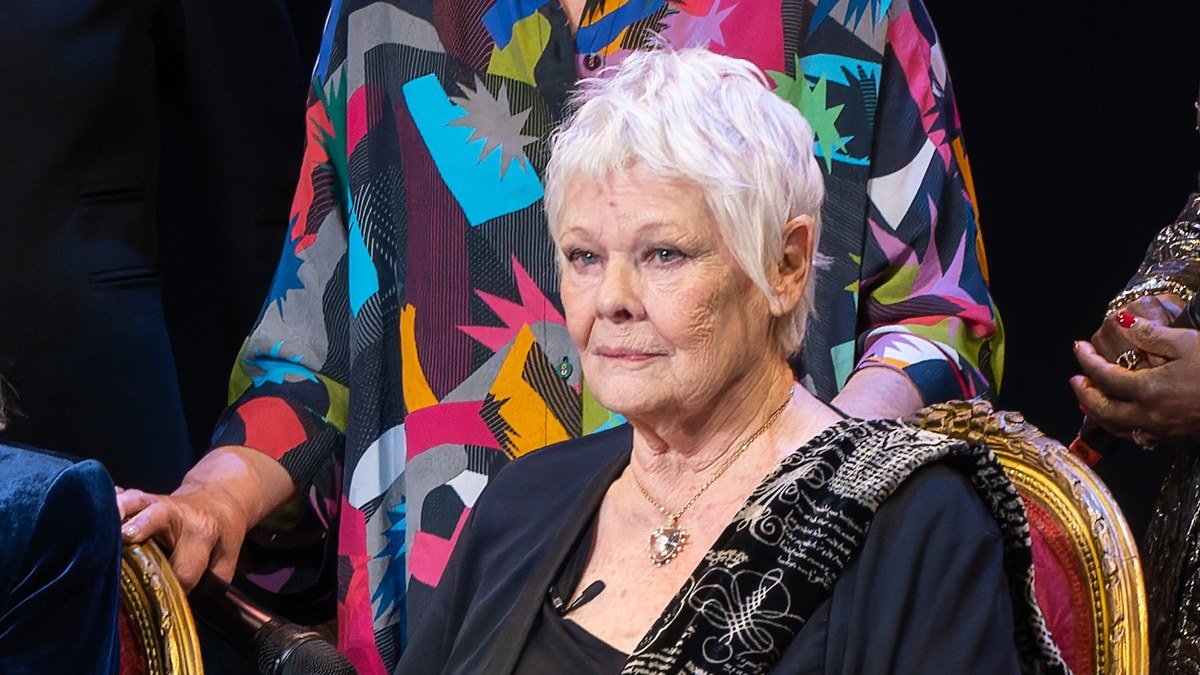
- Photo: Raph_PH, “Gyles Brandreth & Judi Dench & The Dames — London Palladium, March 5, 2023,” CC BY 2.0 license: Wikimedia Commons.
🖼️ Image: a real photograph of Judi Dench (London Palladium, 2023), by Raph_PH, licensed CC BY 2.0 via Wikimedia Commons; cropped by us.